What Is Multi-Accounting and How to Make Money From It

Multi-accounting is the process of a single user operating multiple accounts on a platform. Contrary to popular belief, multi-accounting is not an illegal practice: it is a completely legal tool, which, however, may violate the internal rules of social networks and online platforms. In this article, we will explain where multi-accounting comes in handy, how to safely use multiple personal accounts, and how to make money from it.
Where multi-accounting comes in handy
Creating multiple profiles on a single resource is an important component of making money online. By working with several accounts simultaneously, you can launch advertising in unlimited volumes, collect bonuses from various games, and earn on exchange rate differences on cryptocurrency exchanges. Let's take a closer look at typical examples of using multi-accounting depending on the field.
Social and advertising networks
Millions of users sit on Facebook, Instagram, TikTok, and other platforms, and advertising traffic is constantly flowing here as well. In order to launch it in large volumes and not be afraid of bans, you need to use multiple advertising accounts simultaneously. But there are also a number of other practices that require multi-accounting:
- Monetizing conditionally free traffic by creating multiple accounts for spam mailings
- Separating personal communication, work, and other purposes into different accounts
- Language versions of accounts
- Bypassing bans and blocks
- Using games, entertainment, and other services on a social network from multiple profiles simultaneously to extract profit
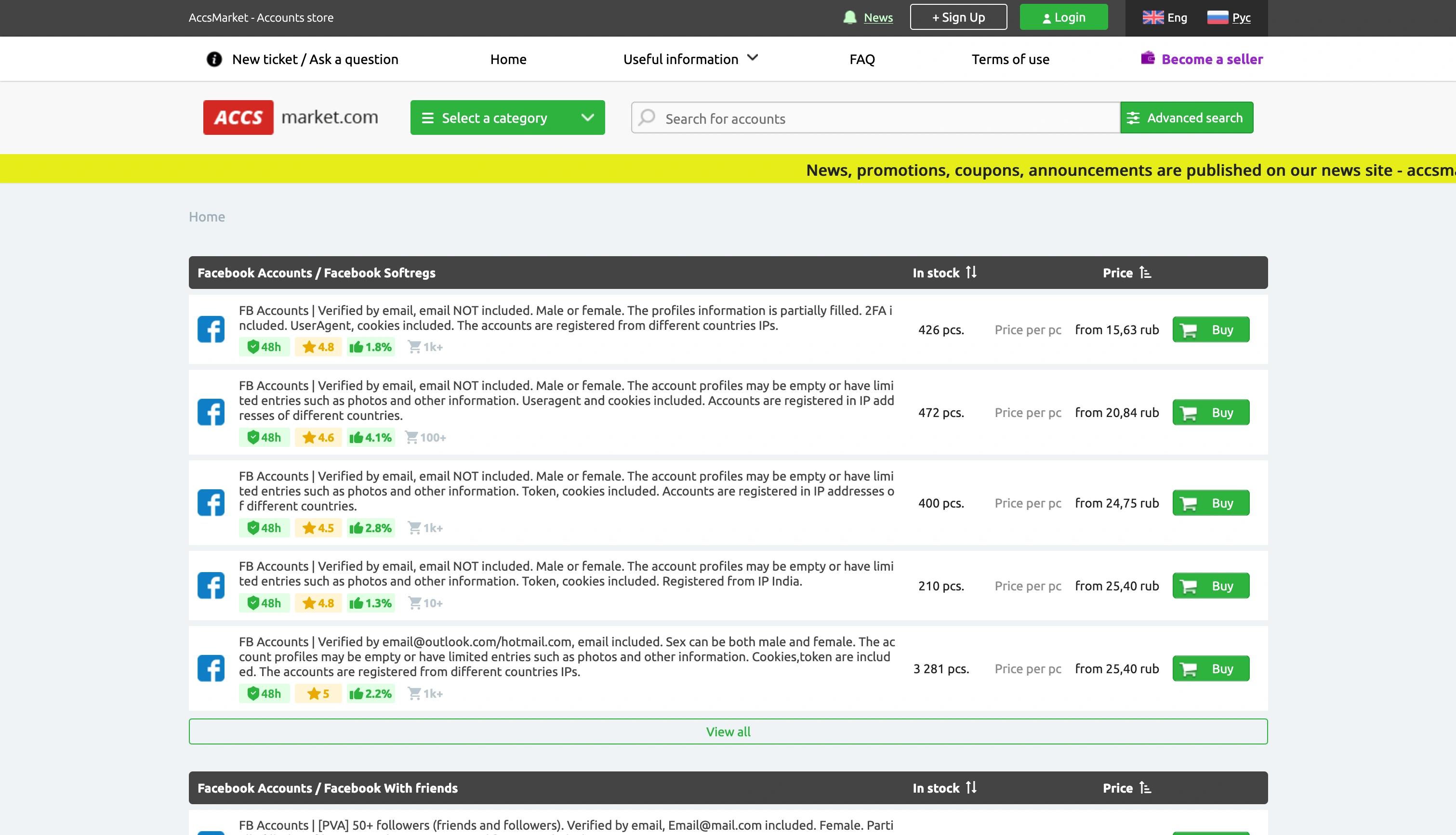
You can create Meta accounts for Facebook and other platforms for sale with a starting price of $1-2 per piece. Warmed-up accounts can be sold for even more: from $10 and up.
e-Commerce
In 2026, competition in the e-commerce sector continues to grow. To achieve a successful return on investment, you need not only to offer high-quality products but also to have all the accompanying infrastructure for their sale. And here is how an account farm comes in handy:
- Business scaling — platforms often impose restrictions on the number of products in a category or the turnover per single product card. Having multiple accounts will allow you to sell more items and successfully test products from various consumer segments.
- Review and reputation management — many sellers create fake buyer accounts to leave positive reviews for themselves, and some even write negative ones directed at competitors. You can simulate activity in other ways: writing questions to yourself for which answers have already been prepared in advance.
- Competitor analysis — a supposed buyer's account will provide the opportunity to see competitors' final prices, track their warehouse balances, and generally check how they operate and how well they cope with their tasks.
- Risk diversification — marketplaces are all-powerful and can always block an undesirable store for one reason or another — if anything helps in this case, it is having a backup account from which you can restart the business.
In e-commerce, having backup accounts is not mandatory, but it significantly increases the seller's capabilities and puts a lot of new useful tools in their hands. This is useful for such popular platforms as:
- Avito
- eBay
- Amazon, etc.
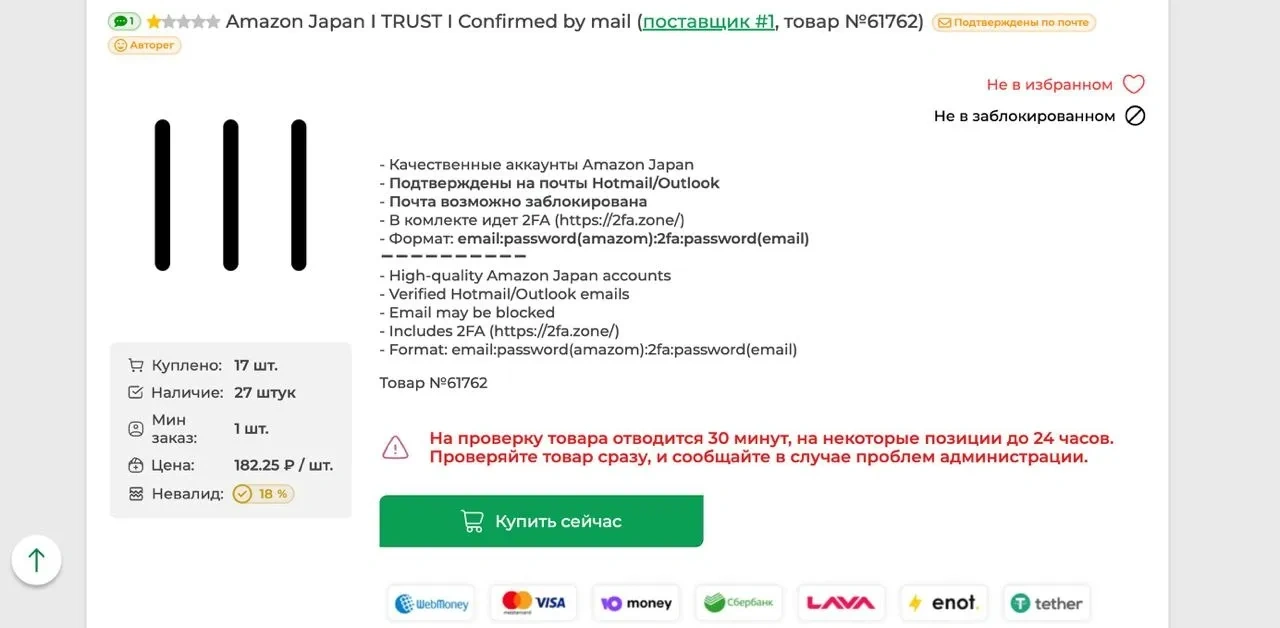
The cheapest accounts on Amazon or Avito sell for $2-3, but their price rises rapidly with a long usage history and the system's trust in the profile. For instance, some Amazon accounts sell for up to $800.
Cryptocurrency exchanges
Multi-accounting is an almost mandatory tool for anyone seriously involved in cryptocurrencies. Here it is used in several aspects:
- Airdrops — New crypto projects distribute tokens to early users for performing certain actions. If you get 100 coins from one account, then from 10 accounts you get a thousand. Subsequently, cryptocurrencies can significantly increase in price, and you will end up winning tens or even hundreds of times more than if you worked with a single account.
- Registration bonuses and referral programs — Many exchanges give new clients welcome bonuses or provide large discounts on commissions via referral links. You can make good money on this: with multiple accounts, you can significantly save on trading various coins.
- Increasing chances of getting into whitelists — Many promising crypto projects conduct closed sales or token distributions among a limited circle of participants, which can only be accessed via a whitelist. The more accounts you have with participation applications, the higher the probability that at least one of them will make it to the coveted list and give access to tokens at the minimum price even before the official listing on exchanges.
- Cryptocurrency arbitrage and P2P arbitrage — These are types of activities involving the purchase of a coin on one exchange at a low cost and its subsequent sale on another platform at a higher price, and in the case of P2P arbitrage — working directly with people. You can earn on penny differences in cryptocurrency exchange rates through large volumes, which multi-accounting will help to build up.
- Bypassing transaction limits — Crypto exchanges set daily and monthly limits on the withdrawal of fiat or cryptocurrency for a single verified account. If you work with large amounts, having multiple accounts allows you to flexibly distribute funds and instantly withdraw the required volumes without waiting for limits to reset and without losing time in critical moments.
- Separation of strategies — You can use multiple accounts simultaneously on one exchange: long-term investments are stored on one, you trade fast positions from the second, and through the third, you test strategies on demo accounts and new trading bots. This allows you not to mix risks and to track clean statistics for each strategy.
Online games
In an era when CS2 and Dota have formed a multi-million dollar entertainment industry, many users resort to creating multiple profiles and thereby extract maximum opportunities from the game. It's simple: online games have plenty of bonuses and monetization opportunities. And here is a simple algorithm of how multi-accounting can help here:
- Creating multiple accounts in one game.
- Completing tasks and receiving a bonus on each account.
- Transferring all resources to the main account.
- Further development of the account with the total amount of bonuses or selling resources for real or virtual money.
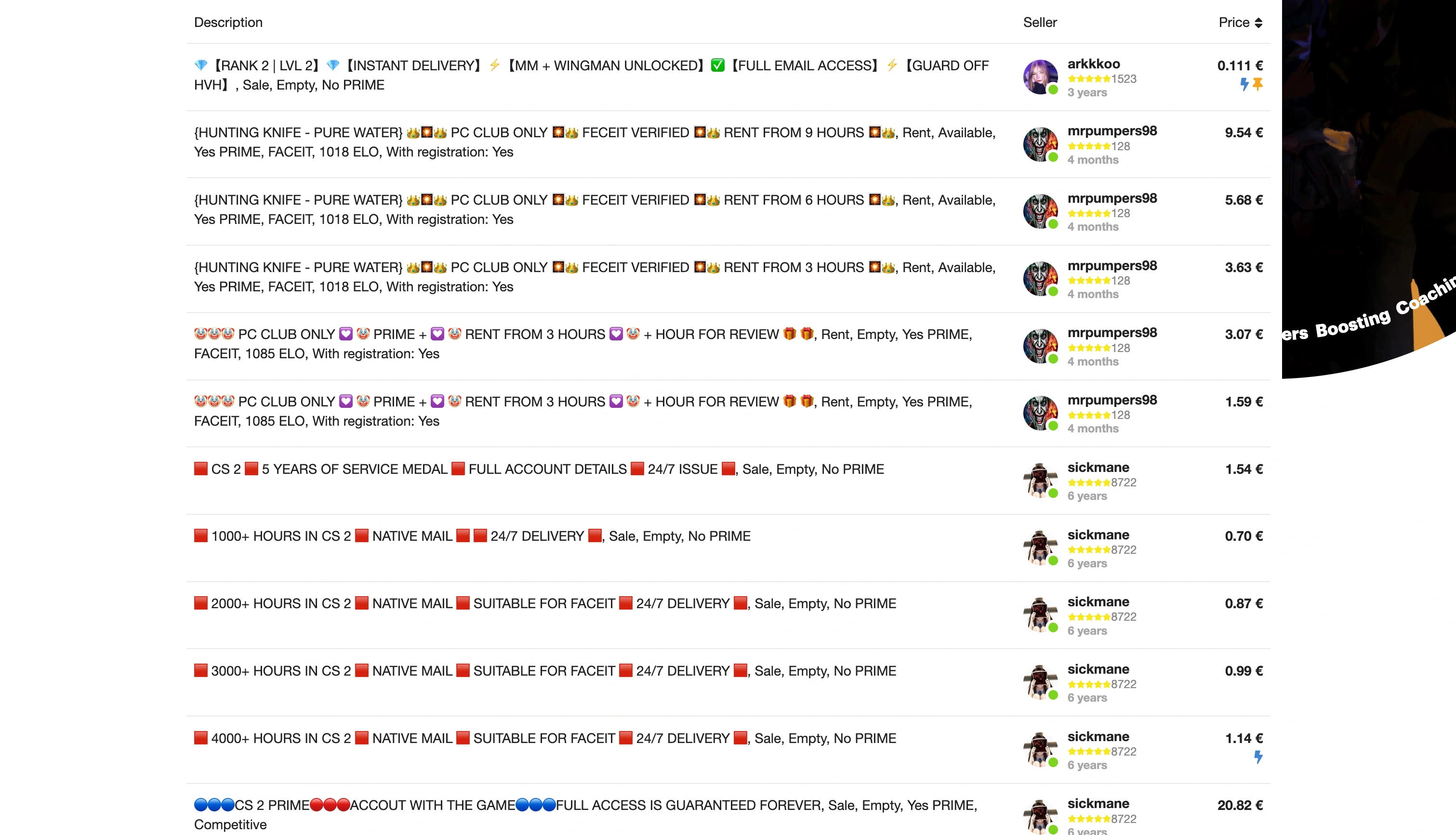
Price tags for accounts for popular games start from a few dozen dollars. Keep in mind that you will need to offer not just a clean account, but a profile with a history, achievements, ranks, and rewards.
Why platforms block multi-accounting
Many websites have a negative attitude towards the practice of multi-accounting, and they have their reasons for this:
- Violation of the web resource's terms and conditions: most platforms prohibit the creation and use of multiple accounts by one person. Violating these rules can lead to the blocking of all linked accounts.
- Manipulation and abuse: multi-accounts are often used to manipulate rating systems, voting, contests, promotions, and bonuses. This creates unfair advantages for those who use multiple accounts and undermines trust in the platform.
- Spam and spread of disinformation: multi-accounts are often used by spammers, and a large amount of irrelevant content negatively affects the user experience and can damage the reputation of platforms.
- Bypassing restrictions and blocks: if a user was blocked for violating the rules, they may try to create a new account to bypass the block. This undermines the platform's efforts to maintain order and security.
- Financial fraud: multi-accounts are used to evade paying commissions, taxes, or other financial obligations. For example, on marketplaces, multiple accounts can be used to bypass limits on receiving discounts or free shipping.
- Creating artificial activity: multi-accounts are used to artificially boost likes, followers, views, and comments, which misleads other users and advertisers.
- Fraud: multi-accounts can be linked to fraudulent schemes, identity theft, and other types of cybercrimes. Using multiple accounts makes it difficult to track and prevent such actions.
Not surprisingly, multi-accounting is becoming an outright undesirable practice for platforms, which is blocked indiscriminately. To understand how to bypass possible restrictions, let's figure out how websites track multi-accounting.
How to avoid getting banned for multi-accounting
When a user visits a website, they leave behind characteristic traces. One of them is precisely the fingerprint, that is, the user's digital footprint, which is made up of device parameters:
- IP address
- User Agent
- HTTP headers
- JavaScript API
- installed fonts
- hardware, etc.
Platforms track this data and also analyze user behavior: even if everything is clean according to the fingerprint, but the time spent working with the site and the algorithm of actions for different accounts are suspiciously similar, they can be blocked. Fortunately, there are several ways to avoid a ban for multi-accounting:
- Using high-quality proxies. The IP address is the first thing a platform checks. Cheap public proxies are already exposed in spam databases, so using them is pointless. For multi-accounting, you need clean private proxies (preferably mobile or residential) that will not reveal your real location and will not arouse suspicion from the system.
- Proper configuration of an antidetect browser. It replaces the device's digital fingerprint, creating a unique and consistent environment for each account. It is important not just to install the browser, but to correctly configure the parameters so that they match the proxy's GEO and do not arouse suspicion during checks.
- Unique content and activity. The technical cleanliness of an account will not help if all your pages behave like bots or clones. Platforms constantly analyze their behavior: identical posts, mass liking in the same public pages, or synchronous online appearances will instantly lead to a block. Each account must look natural — with organic and varied activity.
- Account trust management. This refers to the system's trust, which is built up gradually as the account is used: confirming email and phone, filling out the profile, verification, and performing the first targeted actions are important. You shouldn't immediately put a new account to work — it needs to be warmed up first.
- Using 2FA. Two-factor authentication is not only protection against hacking but also an additional anchor for maintaining access to the account. If the platform suspects something is wrong and asks to confirm identity, having configured 2FA (especially through separate apps rather than SMS) increases the chances of unblocking, as it shows the system that the account owner is a real person.
Multi-accounting is not an approved action on marketplaces, advertising platforms, crypto exchanges, and online games. However, the capabilities of all these resources to detect duplicate profiles are limited, which means you just need to do competent preparatory work before launching an account farm so that it operates correctly.
Conclusion
Multi-accounting is not just a way to hack the system and use multiple accounts simultaneously, but often the shortest path to utilizing all the capabilities of a particular resource to the fullest. Multiple accounts may be required in a wide variety of fields and for various purposes, but platforms do not approve of such behavior and will strive to ban anyone who sits from more than one profile. To bypass their restrictions, follow the tips we have provided in the article, and it will not be difficult for you to manage multiple personal accounts on a site simultaneously.
Frequently Asked Questions
Yes, multi-accounting itself is not a violation of the law. It is a legal tool for business, affiliate marketing, or personal use. Problems only arise when accounts are used for fraud, spam, or other activities prohibited by law or the rules of a specific platform.
A separate profile with a unique digital fingerprint is created in the antidetect browser for each account. A clean proxy corresponding to the account's GEO location is linked to it. It is also important to configure the time zone, language, and other parameters so that they do not contradict each other.
The main risks are the complete ban of all accounts if the platform links them together, loss of access to funds on marketplaces or ad accounts, as well as the time and budget spent on building the system. If you use cheap proxies or low-quality antidetect solutions, these consequences are almost guaranteed.
Platforms analyze the device's digital fingerprint, behavioral factors, and indirect signs—identical payment details and phone numbers being a prime example. Even if the IP addresses of the profiles are different, matching patterns will trigger the security system and lead to additional checks.
As a rule, when it comes to fakes, it is a non-commercial activity that people practice for personal purposes: to view someone else's profile or write a negative comment without revealing themselves. Multi-accounting, on the other hand, is a commercial practice and one of the ways to scale an online business in various fields. Advertising platforms treat both practices roughly the same, but fakes are banned less often because a person usually only needs 1-2 additional profiles, and the behavior on them differs significantly since it lacks a commercial component.