Bonus Hunting — What It Is and How to Make Money on It

The number of online services offering promotions and promos is only growing: casinos, bookmakers, fintech apps, marketplaces, banks, subscriptions. Almost every major service offers bonuses, cashback, free spins, or money for registration, which means there is an opportunity to turn these offers into real earnings.
In this article, we will break down what bonus hunting is, what types of bonuses exist, where to find them, how to properly work with promotions, and how to minimize risks.
What is bonus hunting
Bonus hunting is the systematic search and use of promotional offers to extract financial gain. Simply put, a person registers on platforms, receives welcome bonuses, free bets, cashback, or other promo offers, and tries to fulfill their conditions in order to withdraw real profit.
In iGaming, bonus hunting most often means working with welcome bonuses from online casinos and bookmakers: the user makes a minimum deposit, receives bonus funds, fulfills the wagering requirements, and then withdraws the available balance.
But it is important to remember that bonus hunting is not "free money". Almost every bonus is accompanied by restrictions (wagering requirements, betting limits, expiration dates, requirements for games, accounts, or odds). In addition, operators actively monitor abuse and can restrict an account if the rules are violated.
Mini-dictionary of a bonus hunter's terms
| Term | Explanation |
|---|---|
| Bonus | A promotional offer from a service: a percentage on a deposit, free spins, a free bet, cashback, or a registration gift. |
| Wager | The bonus turnover requirement. It shows how many times you need to bet the bonus amount (sometimes bonus + deposit) to unlock withdrawals. For example, ×5 means that a $100 bonus must be rolled over for $500. |
| Free spin | A free spin in slots. Winnings are often subject to additional wagering. |
| Free bet | A free bet in a bookmaker's office. If you win, the net profit is paid out; the bet amount itself is not returned. |
| Cashback | A return of a portion of lost funds over a certain period. Sometimes without additional conditions, sometimes with a minimum turnover. |
| Referral program | A reward for inviting new users. Both the inviter and the new client receive a bonus after fulfilling the conditions. |
| Loyalty program / VIP | A system of levels for activity. The higher the status, the more privileges: increased cashback, personal offers, accelerated withdrawals. |
| KYC | The identity verification procedure: uploading documents and verifying payment details. Mandatory for legal services. |
What types of bonuses are there
Having dealt with the terminology, it is important to understand exactly which bonuses a bonus hunter most often works with. Promotions differ in accrual mechanics and wagering conditions.
Welcome bonuses. Bonuses for registration and the first deposit. Examples: "100% on the first deposit up to 10,000 ₽", "20 free spins for registration without a deposit".
Deposit bonuses. Credited when replenishing an account. There can be a series: "100% on the first deposit, 50% on the second, 25% on the third". Often tied to promo codes or temporary promotions.

No-deposit bonuses. Credited without a deposit: money or free spins for registration, confirming a phone/e-mail, or installing an app. The most attractive, but usually with strict wagering conditions and withdrawal limits.
Reload bonuses. Periodic bonuses for existing clients, credited upon a repeated deposit. Usually framed as regular promotions: for example, "30% on a deposit every Monday" or "10% on weekends".
Activity bonuses. Can be credited for the number of bets, turnover of funds, completing missions, or participating in tournaments.

Cashback bonuses. A return of a portion of lost or spent funds: "10% of losses every week", "5% cashback on card purchases". Sometimes cashback also needs to be "wagered".

Referral bonuses. Money or percentages from the activity of invited users. They can be one-time (a fixed amount for registration/deposit) or long-term (a percentage of the turnover or losses of referrals).
Promo codes and personal offers. Individual or mass codes for bonuses, free spins, or cashback. They can often be received via e-mail, push notifications, Telegram channels, or streamers.

Where to look for bonuses
For effective bonus hunting, it is important not to get hung up on one type of platform, but to use several sources at once.
Let's consider different options:
- Online casinos. The main source of welcome, deposit, and reload bonuses, free spins, and cashback. It is important to consider the platform's reputation: the presence of a license and reviews.
- Bookmakers. Offer bonuses for registration and the first deposit, free bets, bet insurance, enhanced odds, and cashback for turnover. Additionally, temporary promotions are launched for major tournaments, championships, and significant sporting events.
- Financial services. They provide cash bonuses for opening an account or issuing a card, and rewards for the first purchase or deposit. Often, minimal conditions must be met to receive the bonus.
- E-commerce and marketplaces. Actively use promo codes, registration coupons, bonuses for the first purchase, and loyalty programs with point accruals. Additionally, cashback services and referral programs are connected.
- Mobile apps and subscriptions. Often offer a free trial period, bonus points for installation and registration, a discount on the first subscription payment, or additional cashback when paying with a specific method. Sometimes "refer a friend" programs operate, where both participants receive a reward.
- Crypto projects: airdrops and retro drops — the distribution of tokens to new users.
There are enough sources of bonuses: from casinos and bookmakers to banks, marketplaces, and crypto projects. It is important to check the conditions, deadlines, and restrictions to assess their real benefit.
Step-by-step guide to bonus hunting
Let's look at a step-by-step algorithm for working with bonuses: from finding profitable offers to withdrawing funds.
Step 1. Search and selection of bonuses
Not every bonus brings a profit. Behind attractive advertising, high wagers, strict restrictions, and short wagering periods are often hidden. Therefore, you need to start not with registration, but with a careful analysis of the conditions.
Platforms for finding bonuses:
- Bonus aggregators. Specialized sites like Legalbet collect and systematize current promotions of casinos, bookmakers, banks, and other services. They are convenient for quickly comparing the size of the bonus, wager, deadlines, and type of offer.
- Forums and specialized communities. On thematic platforms, users share their experiences, discuss promotion conditions, and warn about hidden restrictions. This is a useful source of practical information, but the data should always be double-checked.
- Social networks. Official accounts of services, bookmakers, and casinos publish temporary promotions, information about bonuses, and special offers for events or holidays.
- Telegram channels and chats. In Telegram, you can easily find thematic channels and communities where bonus hunting is discussed, new promo codes are published, and experiences and strategies for wagering promotions are shared.
- E-mail newsletters and personal offers. Often, the most profitable bonuses are sent directly to existing users — in emails, push notifications, or in the "Personal Promotions" section of the personal account.
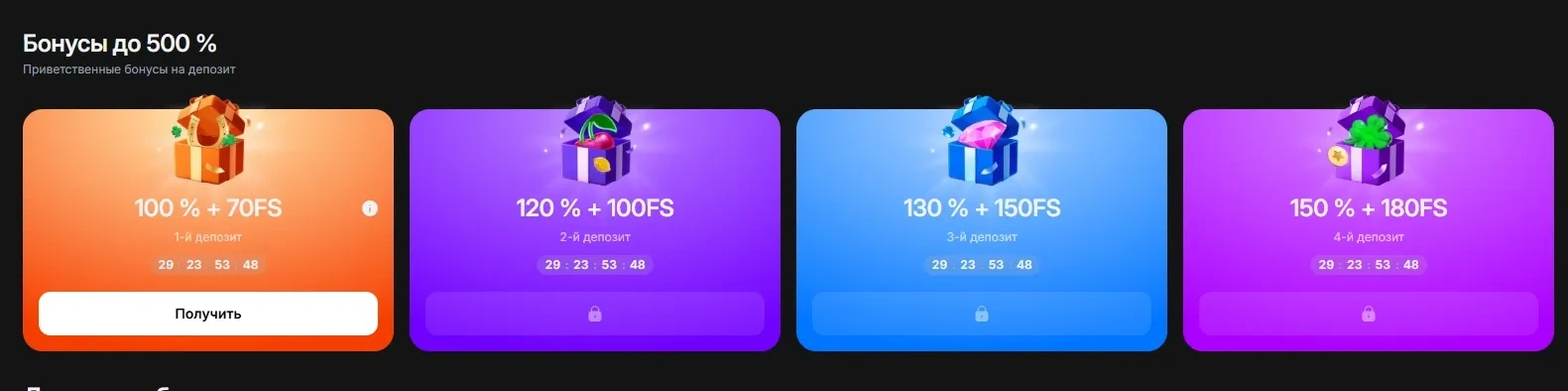
When evaluating an offer, pay attention to several key parameters. First of all, you should consider not only the percentage size but also the maximum accrual amount. An offer of "200% up to 2,000 ₽" and "100% up to 20,000 ₽" provide completely different profit potentials. A high percentage with a low limit often turns out to be less profitable than a more modest percentage but a larger bonus amount.
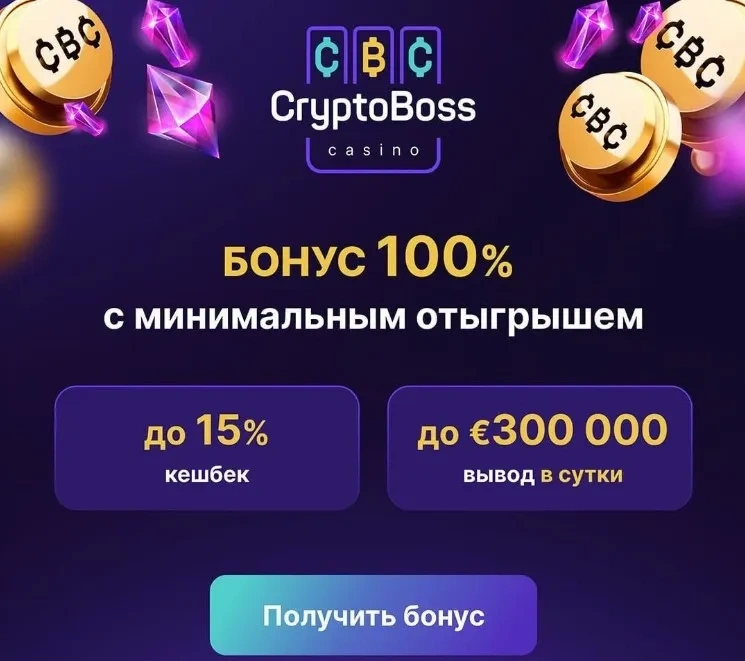
Special attention should be paid to the wager. The volume of bets directly depends on the amount it is charged on. When the turnover is calculated only from the bonus, fulfilling the conditions is much easier. The lower the wager, the more realistic it is to bring the promotion to a result.
The wagering period also plays an important role. If only a few days are given to fulfill the conditions, the risk of not having enough time to close the required turnover increases. A longer period makes it possible to distribute bets more calmly and not make hasty decisions.
Also, pay attention to the restrictions spelled out in the promotion rules. In a casino, not all games may be fully taken into account when wagering, and some are completely excluded. Bookmaker bonuses often have requirements for minimum odds, bet types, or a ban on early cashouts.
Also, check the withdrawal limits. This is especially important for no-deposit bonuses and free spins, where the maximum payout amount can be limited regardless of the size of the winnings.
No less important is the reputation of the platform itself. Before activating a bonus, you should study information about payouts, the verification procedure, and the practice of working with promotions.
Step 2. Registration and verification
After choosing a bonus, we move on to the technical stage — registration and identity verification.
The usual "Incognito" mode or changing IP via VPN is not enough. Modern platforms read your digital fingerprint: screen resolution, installed fonts, video driver version, audio card parameters, and even battery charge.
An anti-detect browser (for example, Linken Sphere) is your main working tool. Unlike regular browsers, an anti-detect allows you to create hundreds of profiles, each of which has a unique digital fingerprint. To the security system of a casino or bookmaker, you log in as different users (for example, once as a MacBook user from London, another time as the owner of a gaming PC from Moscow).
VPN is a "black mark". The IP address databases of popular VPN services (Nord, Surfshark, etc.) have long been known to anti-fraud systems. As soon as you log in through them, your account is marked as suspicious.
Instead, residential or mobile proxies are used. To the platform's security systems, you look like an ordinary person who accessed the site from their home Wi-Fi or smartphone.
Attempting to invent a full name out of your head is a guaranteed way to give your money to the platform. Sooner or later (usually at the moment of withdrawing a large win), you will be asked for documents.
Use:
- Personal data — start with your own accounts or involve relatives and friends (with their full consent) who are far from betting and gambling.
- Partners — in professional bonus hunting, these are real people who consciously register accounts in their name and transfer control of them to you for a percentage of the profit (or a fixed fee).
Your partner must be "clean" (not previously registered on the platform) and always stay in touch. If the security service requests an additional check, the partner must be ready to pass it. Buying someone else's documents in shadow Telegram channels is a lottery. If this same passport has already been sold to ten other bonus hunters, your account will be banned instantly.
Even if you have flawlessly configured an anti-detect browser and selected the cleanest mobile proxies, a technical error when submitting documents (the KYC procedure) can instantly nullify all your efforts. In 2026, this process has become as automated and strict as possible.
The main requirement for a photo is naturalness. You need to follow three rules:
- Perfect shot. The picture is taken in daylight without a flash to avoid glare. All four corners of the document must be visible in the frame.
- Digital cleanliness. You cannot forward photos via messengers — they erase EXIF data (information about the phone model and shooting time). Security systems check this metadata to ensure that the photo was taken on a real smartphone and not downloaded from the network.
- Proof of address. In addition to a passport, proof of residence is often required — a bank statement or a utility bill. The data in them must match the profile questionnaire.
Today, platforms rarely limit themselves to a simple photo. Many have implemented Liveness Check technology. This is a real-time check of the user's "liveness": the system asks you to turn your head in front of the camera, smile, or say random numbers.
Despite the flourishing of Deepfake technologies, it is almost impossible to deceive modern anti-fraud systems. Algorithms instantly detect the smallest defects: unnatural shadows, micro-delays in movement, or inconsistencies in skin texture. Modern anti-fraud systems have high recognition accuracy, so software face substitution often leads to blocking.
The only working solution remains the involvement of a real person. If you work through an intermediary (a "partner"), it is critically important to agree in advance on their readiness to get on a short video call. Without this confirmation, it will be impossible to "revive" the account and withdraw large sums — the system simply will not let the transaction through.
Step 3. Wagering strategies
Getting a bonus is only half the battle. For the virtual numbers on the balance to turn into real money available for withdrawal, you need to fulfill the wagering conditions. Each niche has its own mathematical approaches that allow you to minimize risks.
The main task when wagering a bonus in a casino is to fulfill the wager with minimal losses. To do this, they focus on two key indicators: RTP (Return to Player) and game volatility.
The ideal choice is slots with an RTP of 97% or higher and low volatility. Such games pay out winnings frequently, but in small portions. This allows you to "smear" the bonus amount over hundreds of small bets, avoiding sharp balance drawdowns. As a result, by the time the wagering requirements are met, a significant part of the bonus funds remains in the account.
In betting, the most effective method is considered to be the use of "surebets" (arbs). The essence is simple: you use the bonus to bet on one outcome in one bookmaker, and in another, you bet on the opposite result with your own money.
With this approach, it doesn't matter how the match ends. You are essentially pouring bonus funds into real money on one of the platforms. The "value bets" (Value Betting) strategy is also popular — searching for bets on events whose probability the bookmaker has assessed incorrectly. This requires deeper analytics, but over a distance, it gives an advantage over the establishment.
In the field of online shopping and banking services, wagering is usually not required — the bonus is credited for a specific action, for example, for the first purchase or issuing a card. Here, the main difficulty lies not in keeping the bonus, but in scaling it.
The secret of success lies in the "streamlined" creation of accounts. Using different identities and technical anonymity tools, a bonus hunter takes the welcome discount or cashback not once, but dozens of times.
Step 4. Withdrawal of funds
Withdrawing profit is the most tense moment. It is at this stage that security algorithms conduct the final, most thorough check of the account. If your behavior seems suspicious to the system, the account will be frozen pending an investigation, even if all wagering conditions have been met.
In 2026, cryptocurrencies have finally secured the status of the "gold standard" for bonus hunters. The use of stablecoins (for example, USDT) provides maximum anonymity and transaction speed, leaving no traces in the banking system.
Conversely, bank cards are today considered the most risky method. Direct transfers from gambling platforms or dubious services instantly fall under the radar of financial monitoring. This threatens not only account blocking under 115-FZ but also getting into interbank blacklists, which will greatly complicate the use of any financial services in the future.
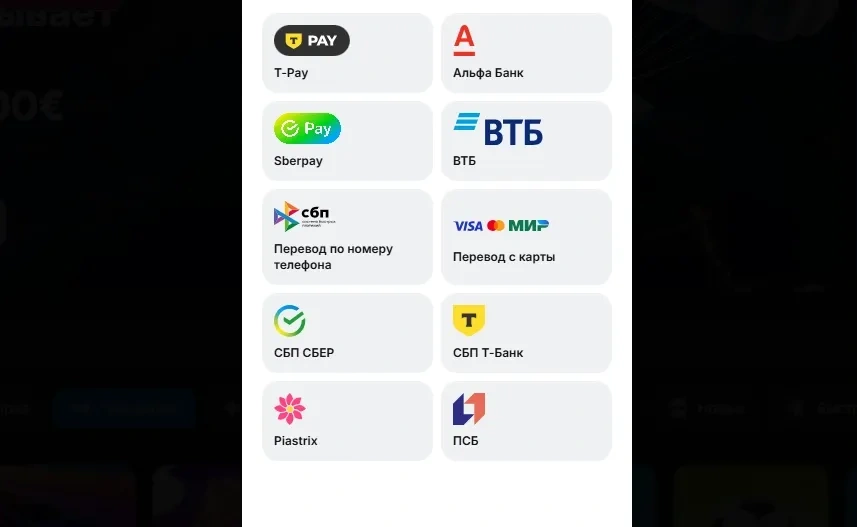
E-wallets (Piastrix, Skrill, Neteller) can be an excellent buffer between the gambling platform and your bank account. The downsides are high internal fees for conversion and transfer to a card. Many wallets in 2026 require the same strict verification as banks.
A typical beginner's mistake is attempting to withdraw the entire balance "to zero" immediately after wagering. For the anti-fraud system, this is a clear signal that the user came only for the bonus. To avoid attracting unnecessary attention, leave 10–15% of the amount in the account. This will create the illusion that you plan to return and continue playing or shopping.
Before clicking the "Withdraw" button, it is extremely important to do a warm-up. A real user does not behave like a robot: they might log in to watch a match broadcast, study statistics, or make a few minimum bets in slots that did not participate in the bonus wagering.
Such activity for 20–30 minutes before withdrawal significantly reduces the risk of manual review. Your task is to blend in as much as possible with the crowd of ordinary clients for whom the service is entertainment, not an income tool.
Carefully read the Terms & Conditions section even before making a deposit. The main financial traps are usually hidden there:
- Commission for an "unrolled" deposit. Many platforms charge a 5% to 15% commission if you withdraw money without betting the deposit amount at least 1–3 times (even if the bonus has already been wagered).
- Daily and monthly limits. Beginners are often restricted in withdrawals (for example, no more than $500 per day). If you hit a big jackpot, the withdrawal can stretch for weeks.
- Exchange rate differences. When withdrawing in a currency different from the account currency, the platform may use its own internal, extremely unfavorable conversion rate.
So that your payout request does not turn into an account ban, observe three critical rules:
- The "Mirror" rule. Withdraw money only using the same method you used to deposit. If you funded your account with a card and try to withdraw to a crypto wallet, the security system will instantly mark the transaction as "suspected money laundering" and block the account.
- Compliance with betting limits. The most common reason for canceling winnings is violating the maximum bet conditions during bonus wagering. Even if you exceeded the limit by one cent just once, this will give grounds to annul the entire profit.
- Documentary cleanliness. Be prepared that upon the first withdrawal, you will be asked for confirmation of the payment method. If it's a card — a photo of it (with covered numbers), if a wallet — a screenshot of the personal account. Any discrepancy between the name in the profile and the name of the account holder will lead to a permanent ban. Sometimes they may request notarized documents by mail in paper form.
Bonus hunter tools
A professional approach implies the use of special tools.
Anti-detect browsers
This is the foundation of all work. Unlike regular Chrome or Safari, anti-detects allow you to create hundreds of isolated profiles, each of which has its own unique "digital fingerprint" (hardware, video card, cookies). To the site, you will look like a hundred different people with different computers.
Examples: Linken Sphere, AdsPower, Octo Browser.
Proxy servers
Without high-quality IP addresses, even the most expensive anti-detect browser will become useless. If the browser spoofs the hardware, then proxies are responsible for your location and reputation on the network. Bonus hunters have completely abandoned server IPs — they are easy to track down. They have moved to more advanced solutions: residential and mobile proxies.
Where to buy reliable proxies: a review of providers
SMS activation services
For the registration of each new account, a unique phone number is needed. Buying physical SIM cards is expensive and inconvenient, so cloud services are used that allow you to rent a number for pennies to receive a confirmation code.
Renting a virtual number for receiving SMS: 5 proven services
Random data generators
When creating multiple accounts on marketplaces or in simple services (where a passport is not needed at the first stage), plausible full names, addresses, and zip codes are required. Generators create realistic profiles that do not look like a random set of letters, which reduces the risk of automatic blocking.
Examples: Random Lists, Fake Address Generator.
Specialized calculators
For wagering bonuses in bookmakers or casinos, you cannot rely on intuition. Bonus hunters use "surebet" and "value bet" calculators, as well as wager calculators. They help to understand exactly how much needs to be bet on the opposite outcome to pour the bonus into real money with minimal commission.
Examples: Surebet calculators, specialized Excel models.
Financial accounting systems
It is recommended to keep detailed spreadsheets where important information should be recorded: logins and passwords, deposit amount, wagering conditions, and withdrawal status. Without this, confusion will begin, which will lead to a loss of money.
Examples: Google Sheets, Notion, specialized CRM templates.
Conclusion
Bonus hunting is a systematic work with the calculation of risks and probabilities. You need to understand technical tools, maintain anonymity, carefully analyze bonus conditions, and evaluate their mathematical feasibility.
It is important to remember that any little thing — from the quality of a passport photo to the abrupt withdrawal of the entire amount — can lead to a block. Therefore, accuracy and discipline are more important here than excitement.
Frequently Asked Questions
Bonus hunting is a way of making money using welcome gifts and company promotions (money added to an account, free bets, or discounts). The main goal is to stay in profit after fulfilling all the conditions. Essentially, you take a portion of the advertising budget that the company allocated to attract a client.
Bonus hunting itself is not a criminal offense. However, most casinos prohibit multi-accounting and the use of special schemes to obtain bonuses. For violating the rules, the account can be blocked and the bonuses canceled.
It all depends on the scale. A solo player using their own profile can make a one-time profit of $300–$700 by going through top platforms. Experienced bonus hunters with account "farms" and special software earn from $2000–$3000 per month.
The main secret is not to stand out. Use high-quality mobile proxies and anti-detect browsers. Do not withdraw money immediately after wagering, do not bet only on bonus events, and imitate the behavior of a regular person: visit other sections of the site, watch broadcasts, and take pauses between actions.
To start, the amount needed for the first deposit (usually from $10–$50) and the purchase of a minimal set of tools (proxies and a couple of phone numbers for SMS) is enough. As profits grow, they can be reinvested into professional software for scaling.
Absolutely not. This is the easiest way to get the entire "chain" of accounts banned. Each new profile must have its own clean IP address, ideally a mobile one, so that the system sees you as a completely new, unique user.