Traffic Arbitrage Case Studies — Lies or Practical Guides?

With the growing popularity of traffic arbitrage, case studies are increasingly becoming a marketing tool rather than a practical guide. Their value is rapidly declining, and for beginners, they can even be dangerous. While a case study used to represent a step-by-step guide where the author shared their experience in detail — which could be replicated to achieve a similar result — today it is more of an advertisement for a team or company, featuring big numbers and minimal details. And for beginners, this pretty picture is a direct path to losing their budget. What could be the reason for this?
The main reason is the global change in the market. Traffic arbitrage has matured and become a full-fledged business. Teams realized they could grow and earn more through traffic volume rather than high ROI setups — the stage of building processes and scaling began. All this led to huge competition and a predictable decrease in ROI year over year. If previously many expected a 300% return on investment from a setup... then 200%... then 100% and lower, now a good result for a team is working with 30-40% net profit per month.
There are no more secret approaches, magic accounts, or unattainable infrastructure: everyone earns through volume and agreements with advertisers. A large team often has lead payouts one and a half times higher than the base rates in an affiliate network, and they test dozens of offers and hundreds of creatives simultaneously — in such conditions, a beginner can only get lucky if they stumble upon a winning combo with their first ad campaign and creative.
The best solution for a beginner in traffic arbitrage is to build their path toward a team: master the necessary knowledge and experience to get an entry-level position and resources, and develop within the collective.
Which case studies are useful in traffic arbitrage
Be cautious of any information that shows you how to earn money: most likely, they want to earn money from you. You need to soberly assess the author's motivation and maintain a grain of skepticism.
The more details in the case study, the better. Even if the final result is negative, but the author described the entire process in detail, you will get significantly more value than from material about a new GEO for a famous product and a six-figure profit sum. At the very least, you won't make the author's mistakes and will save your budget. And the work experience of large teams is practically inapplicable for beginners.
And for example, a current case study from a media buying team:
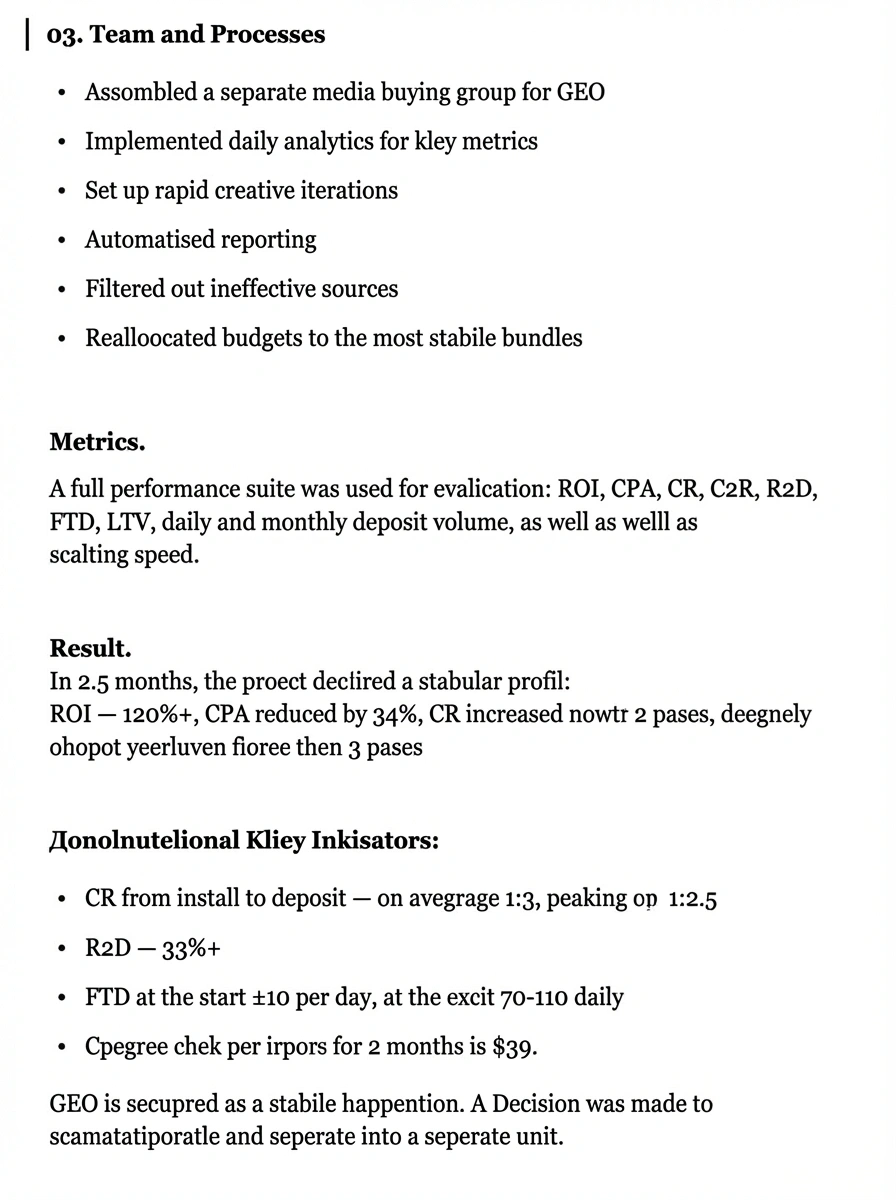
Without a single screenshot of statistics, without an understanding of the budget and intermediate results, they tell in broad strokes over a couple of paragraphs how successfully the team mastered a new region. What is useful here for a beginner? Probably nothing. Exclusively a boost of motivation.
And in contrast, an example of a case study from 2020:

The material contains brief information on the setup (landing pages can always be found in the same affiliate network), approaches in creatives, screenshots of accounts with real spend, leads, and confirmation in the form of statistics from the affiliate network.
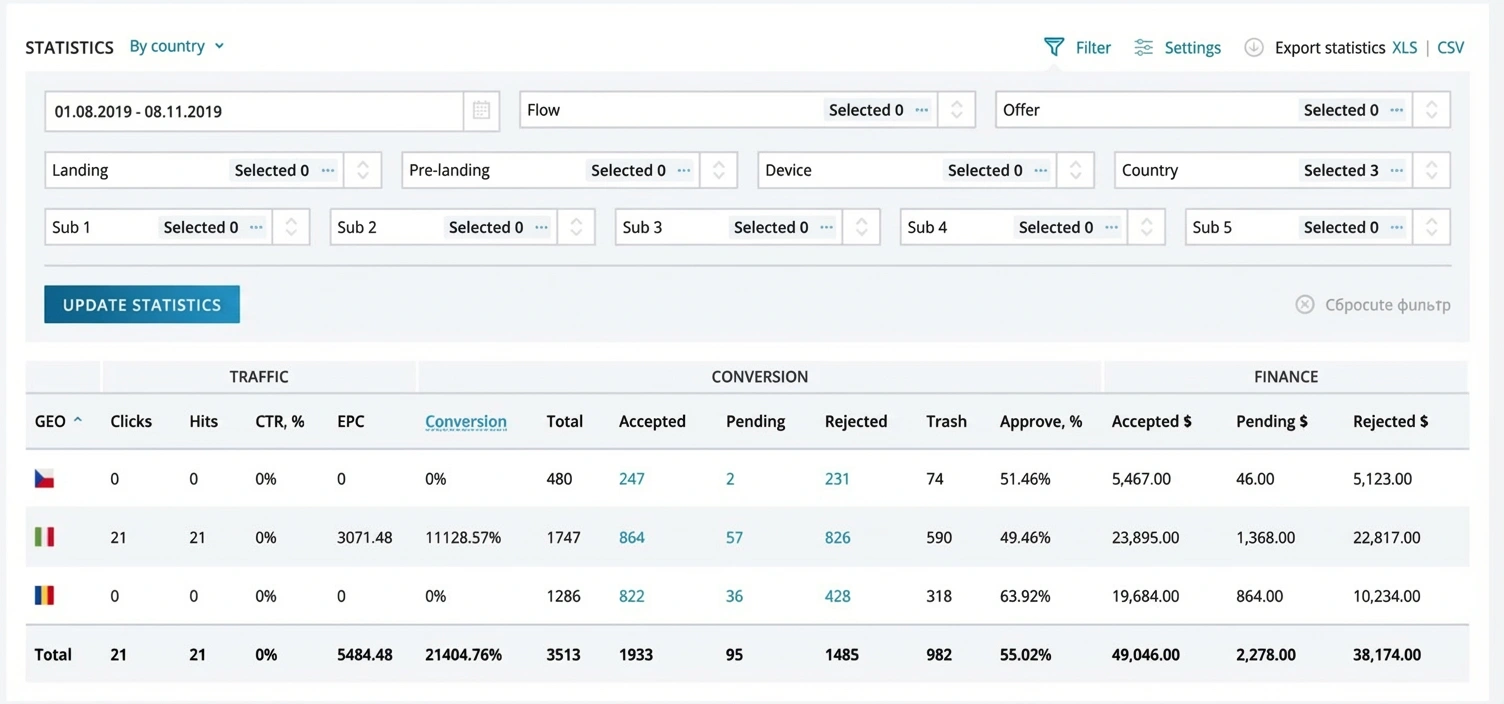
The number of practical nuances has changed significantly: in the media space, case studies have become more like advertising publications rather than a summary of experience. This is neither good nor bad — it is a fact. The situation remains normal practice where a team shares its experience and, by showing its expertise in a case study, recruits employees. If someone is selling you something, that is a reason to think about the truthfulness of the text.
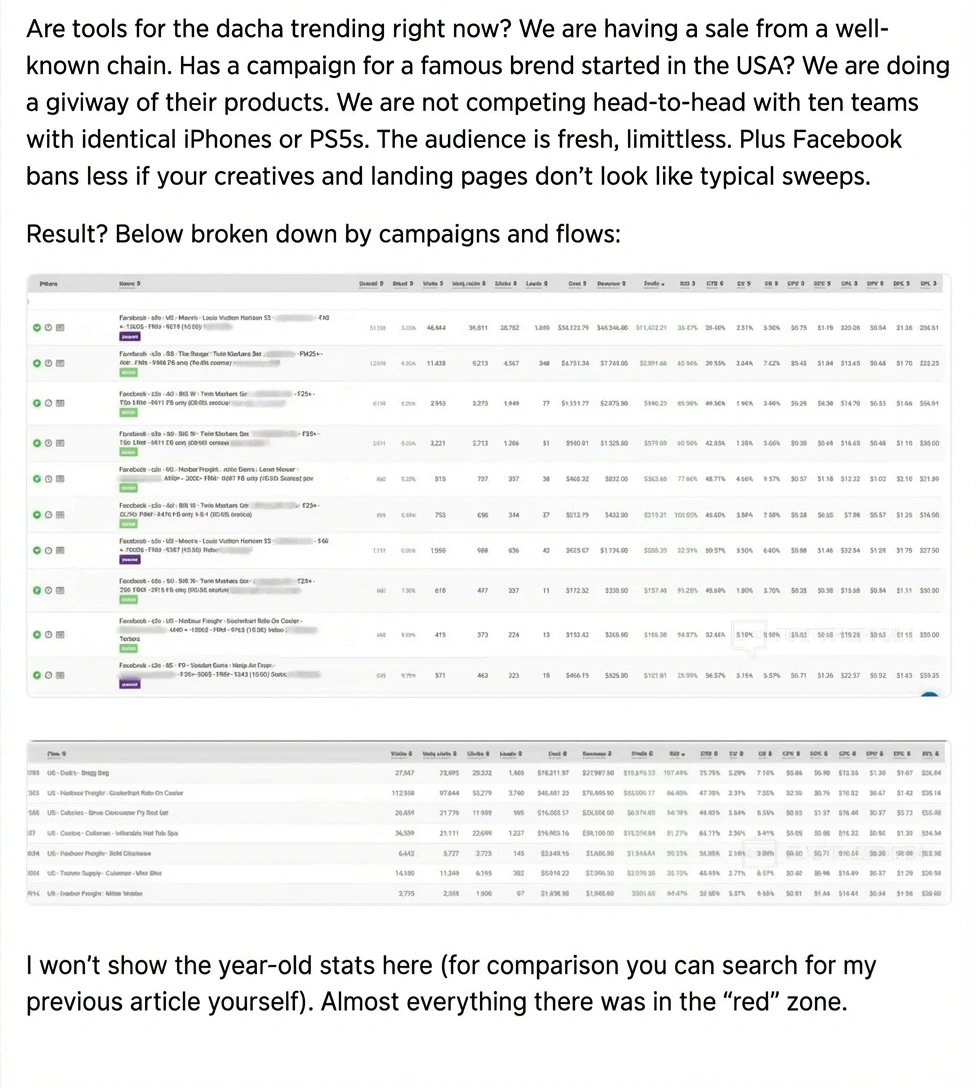

If previously one could build their work in traffic arbitrage using someone else's experience from case studies, now this experience is better sought in the community — author Telegram channels and chats.
The more daily routine and tracker screenshots you see, the more reliable the result. Plus, you can always ask the author or other subscribers clarifying questions or for general advice. Author channels have now become a source of up-to-date information: account setups, technical tools, problems and ways to solve them, approaches in creatives, new offers.
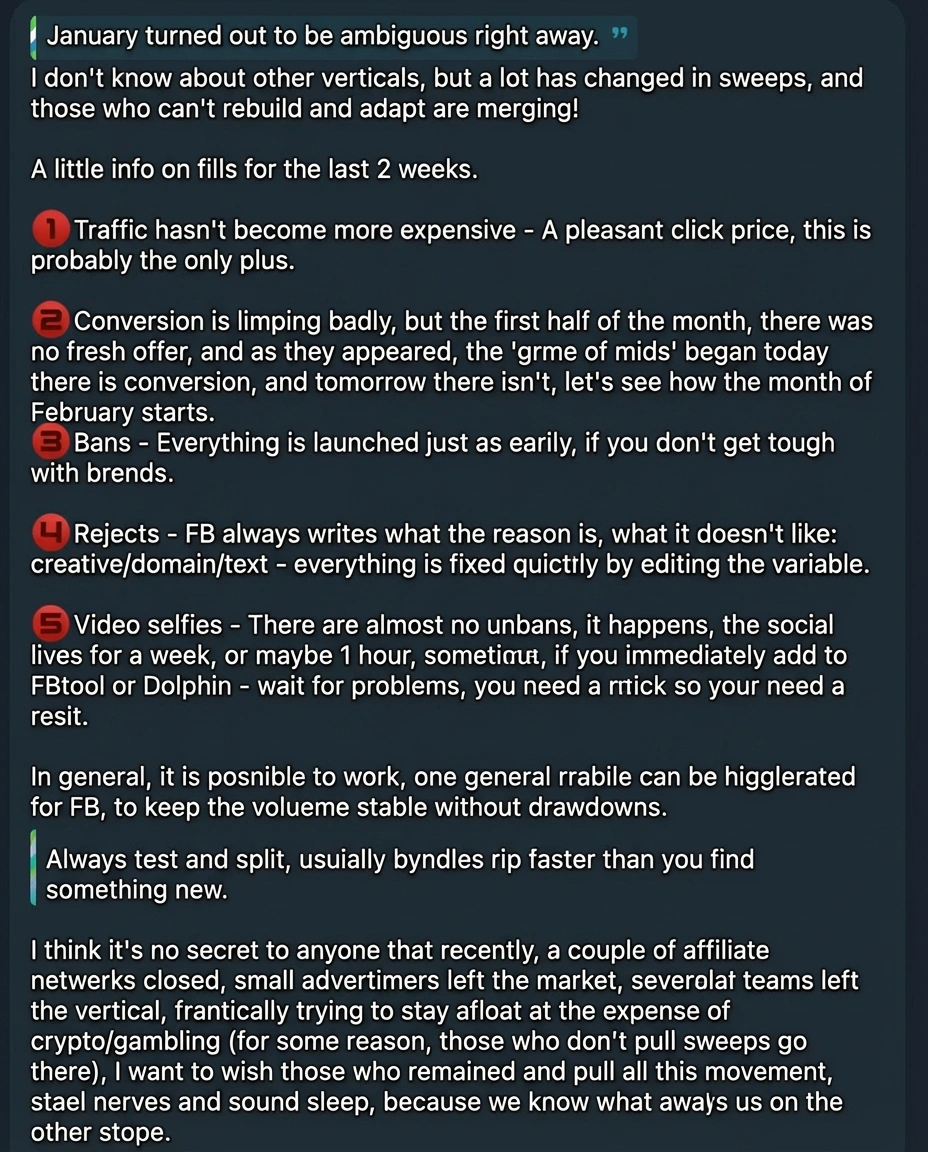
It is important to understand that a large number of subscribers does not always mean quality content. Large influencers and media channels publish advertisements more often than practically applicable content.
As for current approaches in traffic arbitrage case studies, they didn't exist before either: setups were published only after all the juice had been squeezed out of them. Now, with the development of spy services and bots with creatives in Telegram, you can get access to hundreds of current creatives practically for free. Do they yield a positive ROI? That is already a question of tests, the "hook," and luck.
Are traffic arbitrage case studies needed?
It is worth noting that some value in traffic arbitrage case studies remains: they serve as an excellent market marker. An advertiser active in the media space is a sign that the company is developing, allocating budgets for marketing, and, in the absence of public scandals, can become your reliable partner.
Case studies from arbitrage teams are primarily a tool for finding new employees. Based on a case study, one can form a basic impression of the team, understand their target markets, traffic sources, and approaches. This information can be a plus at an interview, as well as motivation to learn more about the team.
As for practical value, a truthful and detailed case study today is rather an exception. Most often they are found in author Telegram channels where the author is looking for a new audience. In any case, information needs to be perceived with caution and passed through the filter of common sense. Especially if, within the framework of the case study, you are persistently advised to use certain services or consumables.
But if you don't read case studies, what should you do to get into traffic arbitrage? Analyze your campaigns and others approaches found in spy services, and seek advice in the community of practitioners. The most important thing is systematicity and consistency.